
History
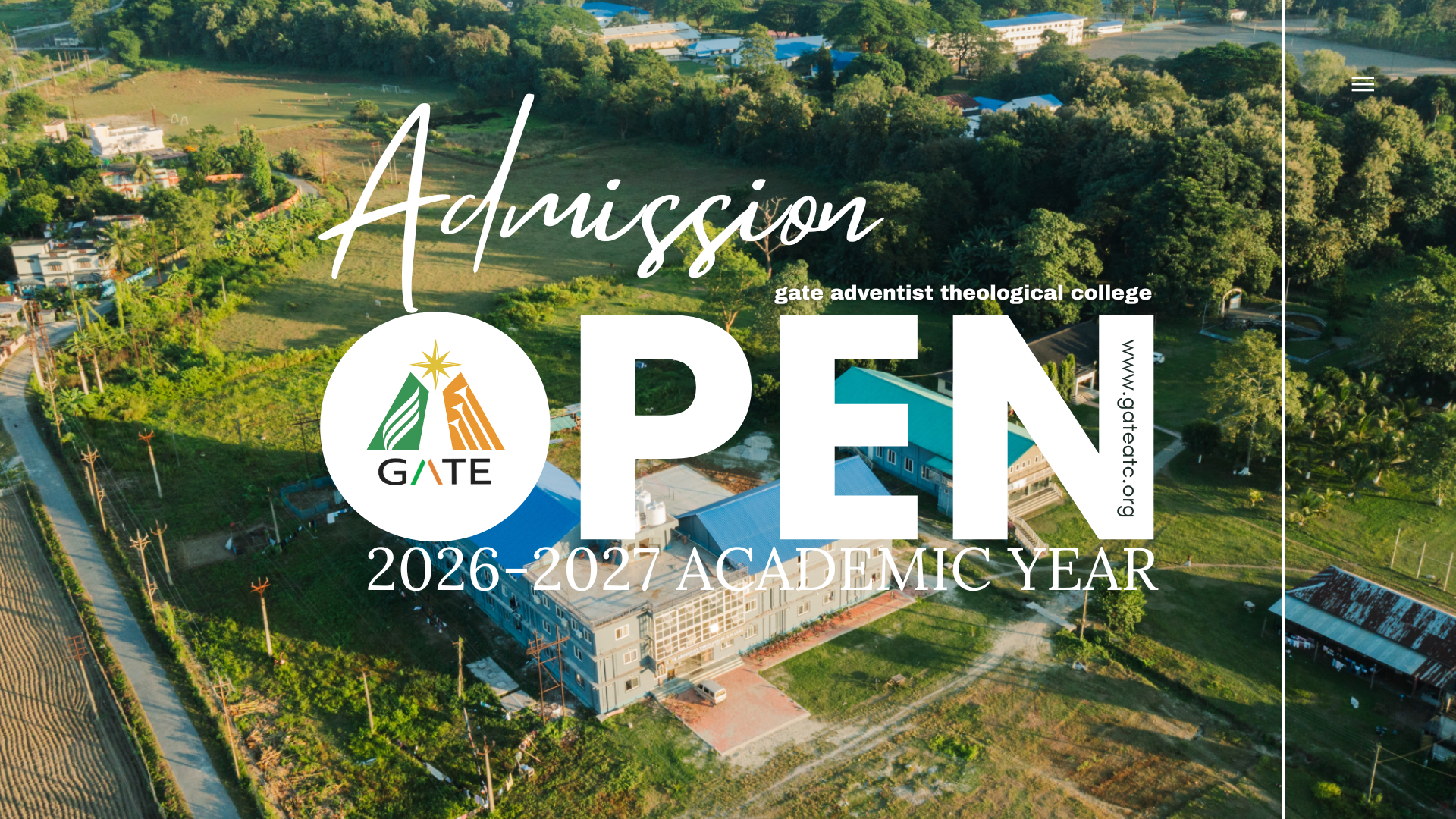
GATE Adventist Theological College, though a new institution in the block, but its existence was perceived out of mission concern. The 1000 Missionary Movement India has been sending missionaries for over 12 years around India, but they encountered challenges due to a lack of adequately trained personnel. This limitation presented an opportunity to dream of an institute that focused on training workers for Northern India, which is home to a massive population of over 900 million.
The dream took tangible form when an official proposal was presented to the Southern Asia Division (SUD) during the mid-year committee meeting on May 16, 2022. In November 2022, during the Year-end Committee, the Southern Asia Division provided a provisional approval “Intent Permission” to advance the project further. Following the guidelines from the Education Department, preparations were meticulously carried out. Successively, during the Division mid-year committee in May 2023, the project was unanimously endorsed and placed under the Mattison Trust.
Emulating the path of Faith, the officers from the SUD and Northern India Union (NIU) proactively stepped forward to engage in a ground-breaking ceremony on April 2023, thereby signifying the formal commencement of a construction endeavor. Advancing with the accrued knowledge of the SUD and NIU, the program culminated in its official inauguration on July 4th, 2023, in the presence of the SUD Education Director, Dr. Edison Samraj, and the NIU President, Pr. Benoy Tirkey. The first appointed President of GATE Adventist Theological College is Dr. Nirobindu Das, Ph.D,.
Why We Exist?
There is a great need for gospel harbingers in regions like the Northern India Union, Northeast India Union, Bhutan, and Nepal. These regions currently comprise approximately 2596 established churches and companies, with a membership count of 217,998. The presence of the theology program in the region would undoubtedly have a beneficial effect on ministry.
Notably, in India, over 300 Adventist schools have been established with a total enrollment of 200,000. However, the efficacy of ministry in these institutions is markedly minimal, with minimum to no active involvement in day schools. The absence of school Pastors in these schools highlights the urgency and inevitability of school ministry to comprehend and execute ministry effectively.
The sizeable population of India, approximately 1.4 billion, necessitates the demand for more leaders to effectively train and guide church members in advancing the gospel.
Thereafter, GATE ATC is born to make a substantial contribution to the mission endeavor by training and equipping skilled missionaries, school pastors, and evangelists for ministries in the urban area, educational institutions, and the unreached territories regions in the northern and northeastern parts of India including countries like Bhutan and Nepal.
We are here not to undermine any existing theological institutions, we are here to corporate and contribute to the great demand.
AIMS AND OBJECTIVES
- To comply with the Adventist educational philosophy.
- To provide inductive exposure to school chaplaincy training.
- To equip students for urban ministry.
- To train students for frontline ministry.
- To prepare qualified mission-oriented workers with servant-leadership qualities.
- To provide opportunities to interact with cross-cultural and international exposures in doing ministry.
- To instill a profound spiritual foundation among its students.
- To foster the development of essential life coping skills that can be effectively employed in the pursuit of ministry and life endeavours.
- To institute a regimen of consistent healthful habits and practices, thereby fostering a state of balanced temperance in alignment with the principles of the Seventh-day Adventist Church.
- To foster the growth and development of the students, enabling them to evolve into valuable, industrious, and socially beneficial members of society.
Location and Weather
Falakata, located in the Alipurduar district of West Bengal, India, experiences a subtropical climate with three distinct seasons: summer, monsoon, and winter. Here's a breakdown of the weather in Falakata:
- Summer (March to June):
- Summers are warm and humid, with temperatures ranging from 25°C to 35°C.
- April and May are typically the hottest months.
- Light cotton clothing is recommended during this season.
- Monsoon (June to September):
- Falakata receives heavy rainfall during the monsoon season due to the southwest monsoon winds.
- The region is lush and green during this time, but humidity levels are high.
- Average rainfall ranges between 2500 mm to 3000 mm annually.
- Waterproof gear and umbrellas are essential.
- Winter (November to February):
- Winters are mild and pleasant, with temperatures ranging from 10°C to 25°C.
- December and January are the coldest months, with occasional fog in the early mornings.
- Light woolens are sufficient for this season.
Falakata's weather is influenced by its proximity to the Eastern Himalayas and the nearby forests, making it a scenic and comfortable destination for most of the year. The best time to visit is during the winter months (November to February) when the weather is cool and pleasant.
Contact us
Below is a list of selected important contact information.
Department | Phone Number |
|---|---|
GATE Chairman | +91 9800478180 |
President | +91 9159745408 |
Academic Administration | +91 7875610017 |
Business Manager | +91 9749115190 |
Student Services | +91 914555438 |
Dean, Men’s hostel | +91 6009090695 |
Dean, Women's hostel | +91 9307782638 |
Email: gateatc7@gmail.com